Research, UI Design, Usability Testing
Reducing Operational Load
by Improving the content review experience
by Improving the content review experience
Partipost, 2023
Research
UI Design
User Interview
Usability Testing
UI Design
Product Manager
UX Writer
Full-Stack Engineers
• Enabled clients to manage their own campaigns
• Reduced registrations requiring assistance from 30% to 10%
Why do clients need the operational team’s assistance with registration reviews?

To support Partipost’s strategy of reducing the workload of the operations team, our team investigated their workflow.
We noticed that 30% of registrations require assistance from the operations team, which conflicts with the purpose of the registration feature. This feature is designed to allow clients to list their preferences for influencers—such as follower count or profile type—then have influencers complete the registration. Clients can then select those who match their brand image to complete tasks like posting content on social media.
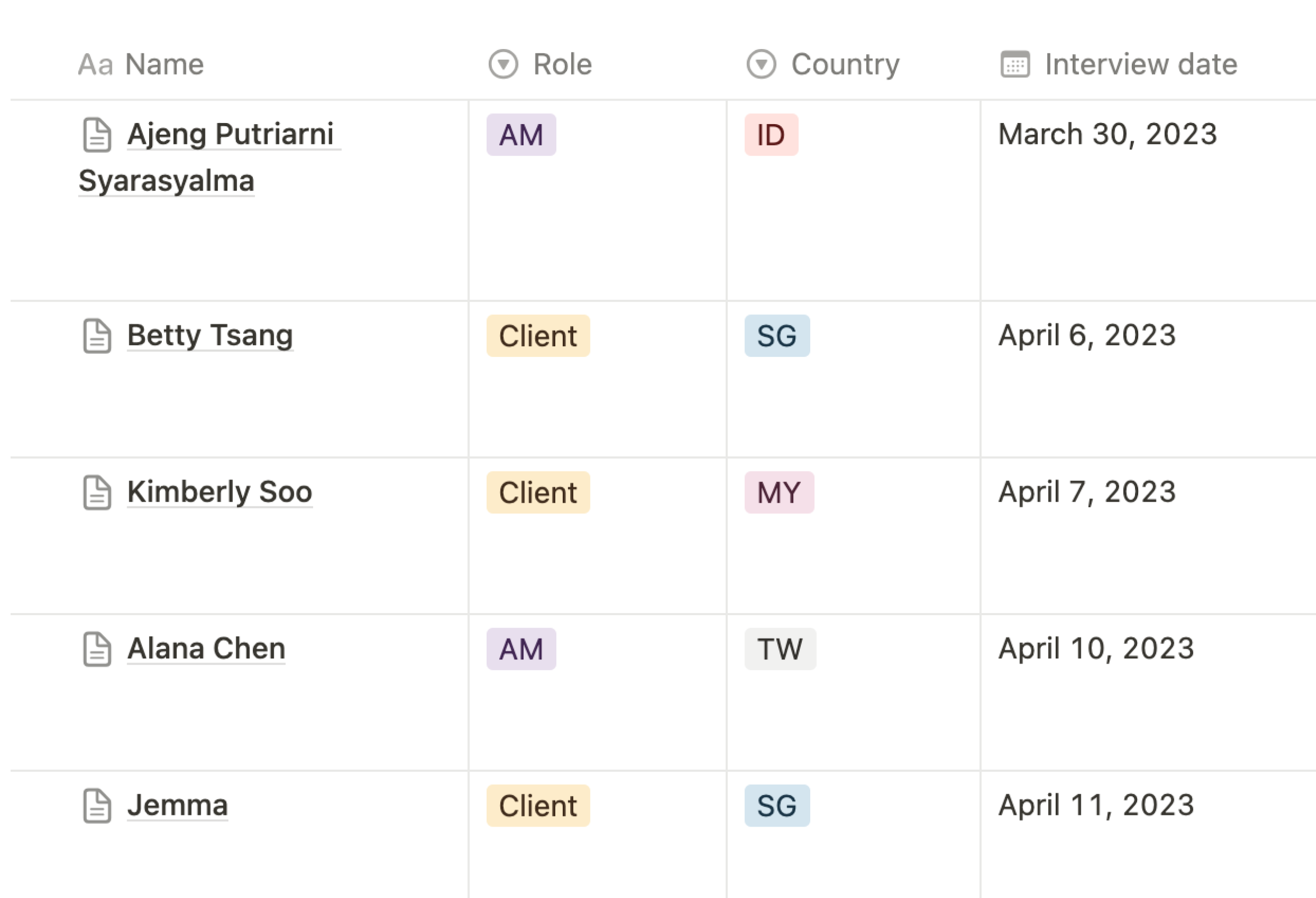
To understand why clients require assistance with registration approval, the PM and I conducted user interviews with operations leads and clients from different countries.
Our assumption:
Research Questions:
By interviewing five operations leads and two clients, we found that clients aim to ensure every profile wishing to join their campaigns undergoes thorough scrutiny by their teams during the registration review process. However, the following pain points hinder clients from easily using our platform to review registrations independently and require significant effort from the operations team.
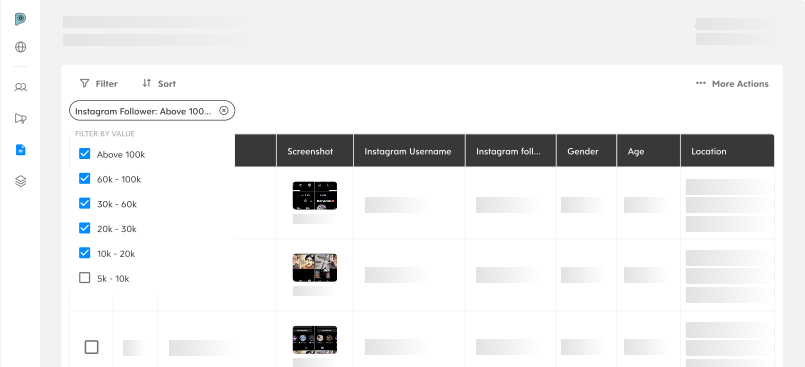
We see users struggle using our current filters, so we prioritize this feature to be improved.
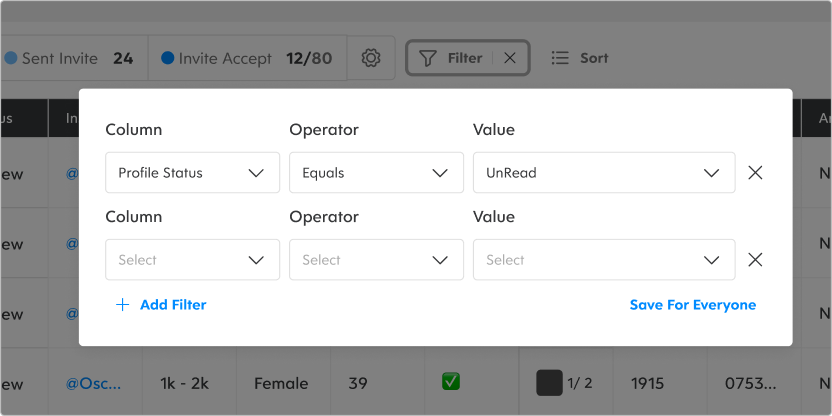
At first, I attempted this version with minimal changes while ensuring UI consistency with the new design system.
However, during user testing, I observed that most users were unsure about which option to select inside the operator dropdown. As a result, users frequently skipped selecting an operator and instead directly chose a value to filter
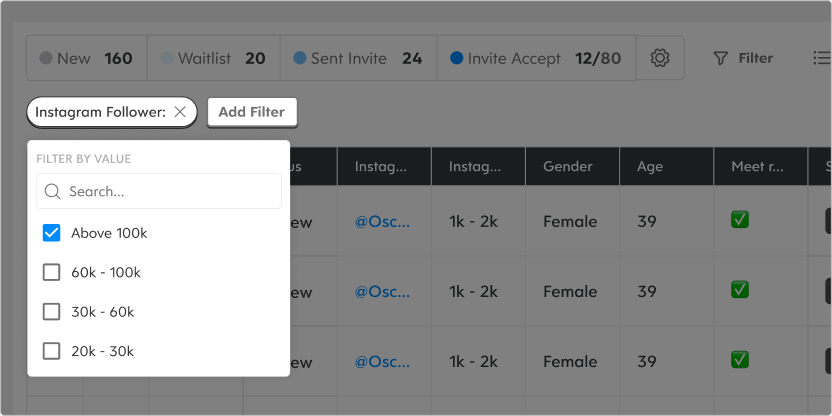
Based on the observation in exploration 1, I noticed users only consider the value they want to be filtered in the table.
Therefore, I come up with this version and keep users’ focus on the values.
Objectives
Testing Plan
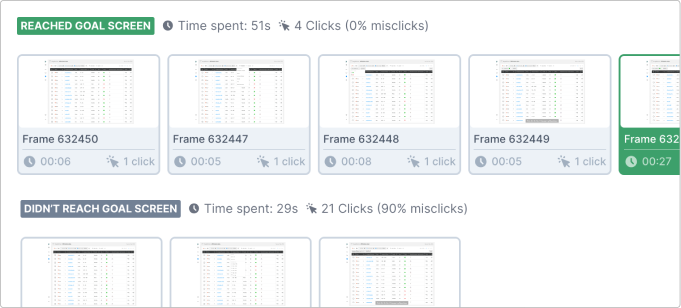
In each flow, we will assign users a task to complete and observe if they can reach the goal screen using the click map. Subsequently, we will ask users questions to validate the effectiveness of the design.
Questions we ask in survey
Sorting Flow
85% (30/35) of testers successfully reach the goal screen without additional user education
Filtering Flow
76% (16/21) of testers answered the new filter experience is easier to use compared with the existing one
(21 testers are the users answered they have used the existing filter in our platform)
Completing the entire flow
89% (31/35) of testers successfully reach the goal screen without additional user education
Reduction in operational support needed for registration
Increase in external user engagement

Laid the foundation for users to explore our platform

New components and patterns for future projects
From a business perspective, we effectively reduce the amount of time the operations team needs to spend reviewing profiles and assisting clients in managing them.

By building a sorting feature, we meet users' need to easily select influencers from highest to lowest followers without exporting to Google Sheets.
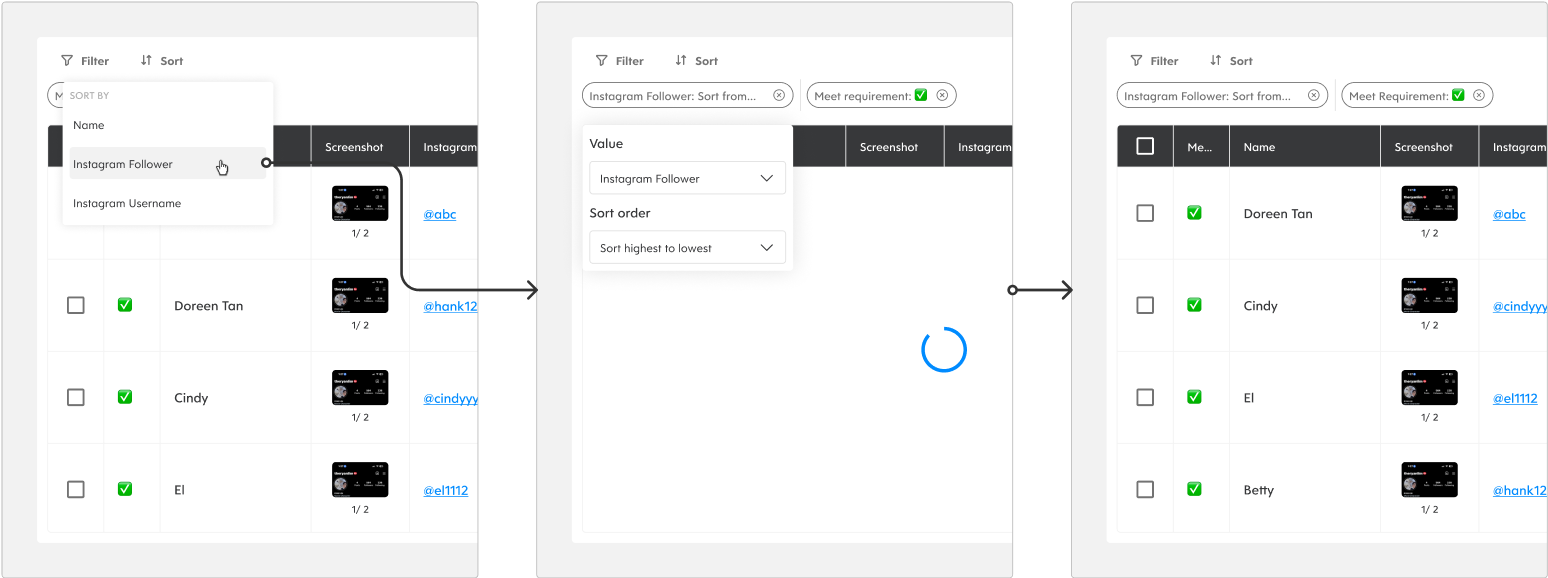
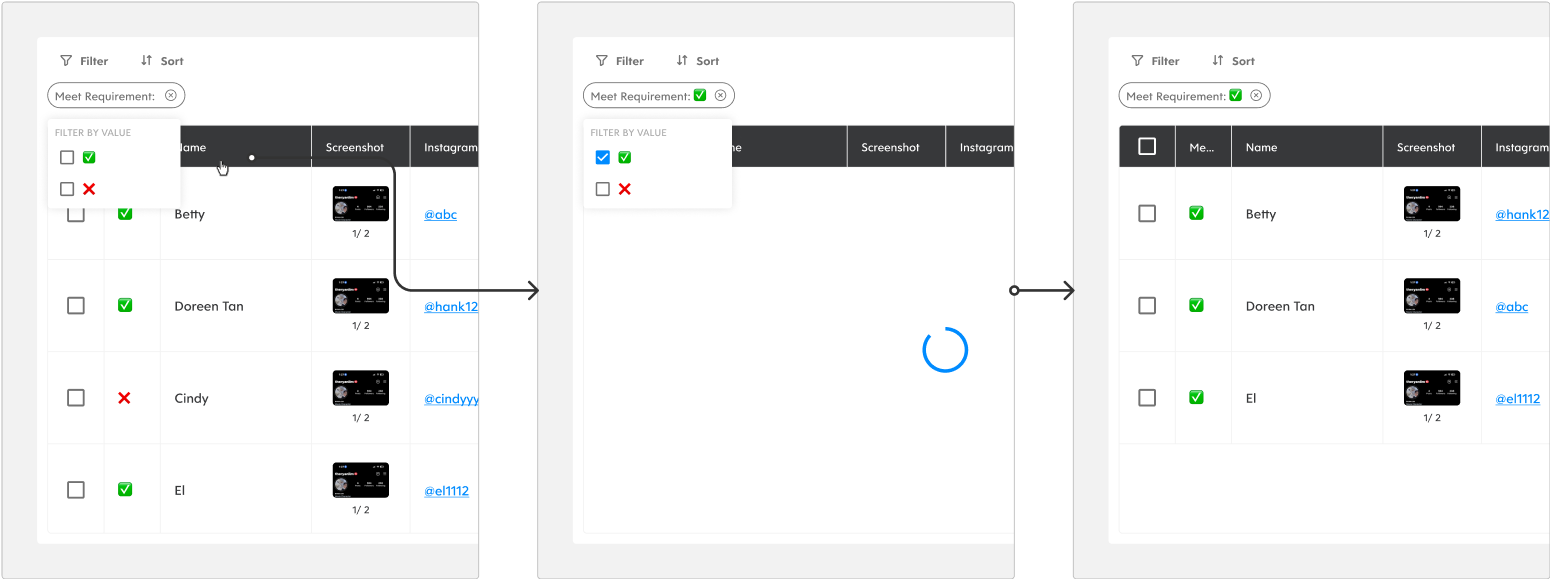
After improving the filtering feature, users can now select multiple values from each category.
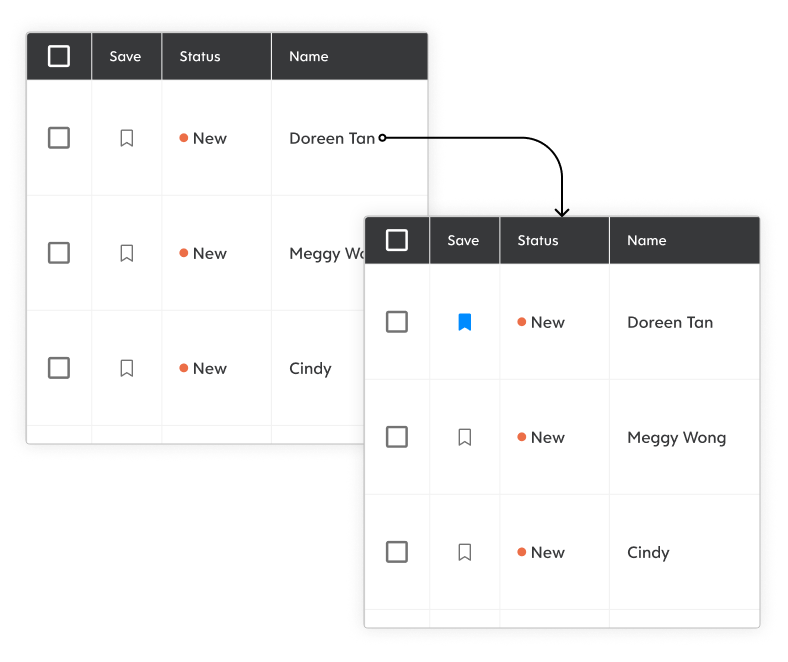
We are also introducing a marking feature to satisfy users' needs that could not be met with our platform before.
Now, users can mark profiles they find acceptable and use them as a backup plan when there are no new registrations but still empty slots.
This project not only achieved the business impact, but also created new sets of components for future designers and engineers to have a universal language across the platform.
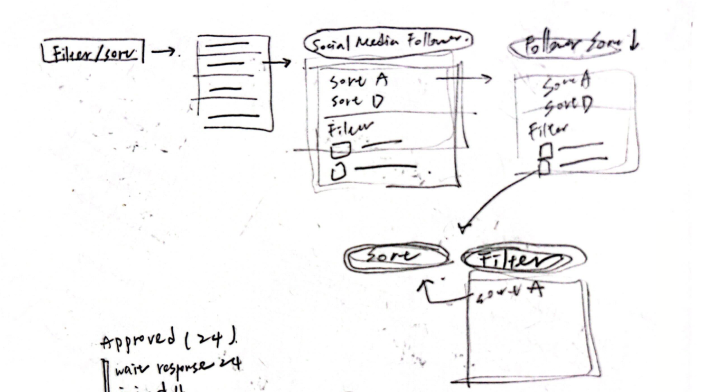
As the lead designer of this project, I started by reusing the designed atoms to build the molecules - chip, moved to organisms to build menu, and finally composed everything together to build the filter pattern. In the documentation, I documented the entry point, filtering options, error states, data display, and empty states.
Later, I worked with a front-end engineer to implement the interactions and controls in Storybook for designers to easily test the interactions and reduce future back-and-forth on component alignment between engineers and designers.


